
The 2027 Kia Telluride arrives as a full redesign with a new turbocharged engine, an available hybrid, and a starting price under $40,000 . The 2026 Toyota Grand Highlander carries over unchanged, still offering its cavernous interior and the segment's most powerful hybrid option . On paper, the Telluride looks like the value play — more standard features at a lower price, backed by a 10-year powertrain warranty . But the Grand Highlander counters with up to 97.5 cubic feet of cargo space, an adult-friendly third row, and Toyota's historically superior resale value . Here's how the numbers shake out when you measure what actually matters: space for your family, fuel costs over time, and which one leaves more money in your pocket when it's time to sell.
Pricing & Standard Features: The Upfront Gap Is Real
The Kia Telluride starts at $39,190 for the base LX trim. The Toyota Grand Highlander opens at $41,660 for the LE trim — a $2,470 advantage for the Kia before even considering additional equipment.
But the base-price story undersells the Telluride's value edge. Kia packs the entry-level LX with dual wireless phone charging, front and rear parking sensors, smart cruise control, and an eight-speaker audio system — all standard . The base Grand Highlander LE has none of those items. You don't get parking sensors or wireless charging until you climb the Toyota's trim ladder, and that gap persists through the mid-range.
At the hybrid level, pricing for the Telluride Hybrid hasn’t been released yet, but the Grand Highlander Hybrid starts at $45,010. The Hybrid Max — Toyota’s performance hybrid with 362 horsepower — begins at $55,490 and tops out at $59,575 for the Platinum trim.
The value verdict: If upfront cost and standard equipment matter more to you than brand cachet, the Telluride is the clear winner. You're getting more features for less money across every comparable trim level. The gap narrows slightly when you factor in Toyota's historical resale advantage — more on that below — but on purchase price alone, the Kia wins.
Powertrain & Fuel Economy: The Hybrid Math Shifts
The 2027 Telluride drops the old V6 in favor of a 2.5-liter turbocharged four-cylinder producing 274 horsepower and 311 lb-ft of torque, paired with an eight-speed automatic . The Grand Highlander's gas engine is a 2.4-liter turbo-four with 265 hp and 310 lb-ft . The Kia holds a small power advantage, but in daily driving, neither will feel meaningfully quicker than the other.
The more interesting comparison is on the hybrid side. Kia's new Telluride Hybrid uses a turbocharged 2.5-liter hybrid system producing 329 hp and 339 lb-ft, with a claimed combined fuel economy of up to 35 MPG . Toyota offers two hybrids: the standard hybrid with 245 hp and up to 36 MPG combined, and the Hybrid Max with 362 hp and 27 MPG combined .
The fuel-cost translation, at 15,000 miles per year and $2.97/gallon:
Powertrain | Combined MPG | Annual Fuel Cost |
|---|---|---|
Telluride Hybrid | 35 | $1,273 |
Grand Highlander Hybrid | 34-36 | $1,238–1,310 |
Grand Highlander Hybrid Max | 27 | $1,650 |
Telluride Gas | ~24 (est.) | ~$1,856 |
Grand Highlander Gas | 22-24 | $1,856–2,025 |
Telluride gas MPG is estimated based on the new turbo engine; EPA figures are not yet published. Grand Highlander figures from EPA via Kelley Blue Book and Yahoo Autos .
The Telluride Hybrid lands in a sweet spot: more power than Toyota's base hybrid (329 hp vs. 245 hp), nearly matching its efficiency, and significantly more efficient than the Hybrid Max while still delivering strong output. If Kia prices the Telluride Hybrid closer to the Grand Highlander's base hybrid than to the Hybrid Max — which seems likely, given Kia's historical pricing strategy — it could be the best value hybrid in this segment. But we won't know until the pricing is released.
The powertrain verdict: For gas-only buyers, the difference is marginal. For hybrid buyers, the Telluride Hybrid looks like the most balanced option — provided Kia doesn't price it into Hybrid Max territory. Wait for the hybrid pricing before deciding.
Interior Space: Toyota Wins the Cargo War, Kia Fights Back on Third-Row Access
This is where the Grand Highlander justifies its name.
The Toyota offers 20.6 cubic feet behind the third row, 57.9 cubic feet behind the second, and a segment-leading 97.5 cubic feet with both rows folded . The Telluride counters with 22.3 cubic feet behind the third row — slightly more than the Toyota — but falls behind at 48.7 cubic feet behind the second row and 89.3 cubic feet total .
What those numbers mean in real life:
Behind the third row: The Telluride's 1.7-cubic-foot advantage is roughly one extra carry-on suitcase. Useful, but not transformative.
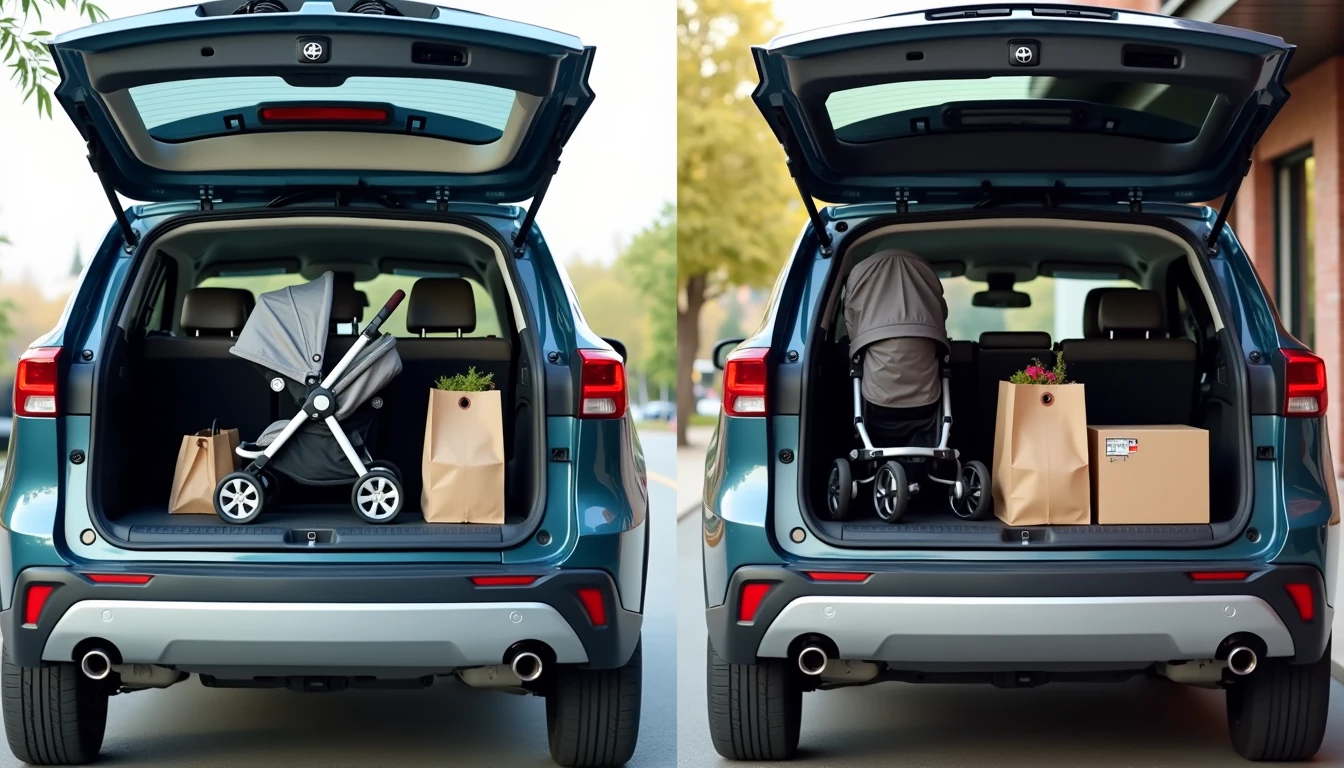
Behind the second row: The Grand Highlander's 9.2-cubic-foot edge is significant. That's the difference between fitting a full-size stroller and a week's worth of groceries, or having to choose between them.
Maximum cargo: The Toyota's 8.2-cubic-foot advantage means more flexibility for furniture runs, camping trips, or the kind of Costco haul that makes you question your life choices.
Third-row passenger space tells a more balanced story. The Grand Highlander provides 33.5 inches of third-row legroom, which Car and Driver describes as "usable by full-grown adults" . The Telluride's third row is also adult-friendly, and Kia's available second-row captain's chairs with one-touch fold make access easier than the Toyota's setup.
The space verdict: If you routinely fold the third row and use your SUV as a cargo hauler, the Grand Highlander wins decisively. If you keep the third row up for passengers and value easy access, the Telluride holds its own.
Resale Value: The Toyota Factor
This is the dimension where historical data favors the Grand Highlander — and it's worth real money.
The Grand Highlander consistently appears on "best resale value" lists, benefiting from Toyota's broader brand reputation. iSeeCars data shows the Grand Highlander retains roughly 69.6% of its value after five years. The outgoing Telluride also performed well in resale rankings, but the new turbocharged engine and hybrid system introduce uncertainty — first-year reliability data for the redesigned model won't exist until late 2026.
Kia's 10-year/100,000-mile powertrain warranty partially offsets this concern . A used Telluride buyer in 2029 will still have several years of powertrain coverage remaining — something a used Grand Highlander buyer won't have after Toyota's five-year/60,000-mile warranty expires . Whether the market values that warranty transfer highly enough to close the resale gap is an open question.
The resale verdict: The Grand Highlander's historical advantage is real, but the Telluride's warranty could narrow the gap. If you plan to own for seven-plus years, depreciation differences shrink and the warranty matters more. If you trade out every three to five years, the Toyota's resale edge matters more.
Warranty: Kia's Quiet Value Advantage
Warranty coverage rarely makes the headlines in a comparison test, but it should. The Telluride comes with a five-year/60,000-mile limited warranty and a 10-year/100,000-mile powertrain warranty . The Grand Highlander carries a three-year/36,000-mile limited warranty and a five-year/60,000-mile powertrain warranty .
For a buyer planning to keep the vehicle beyond the loan term, this difference matters. A major powertrain repair in year six or seven — outside Toyota's coverage window but well within Kia's — could erase years of fuel savings. The warranty isn't a tiebreaker for everyone, but it's a quantifiable financial variable that deserves a place in the value equation.
The Bottom Line
Dimension | Winner | Margin |
|---|---|---|
Purchase price | Telluride | $2,470 lower base, more standard features |
Cargo space | Grand Highlander | Decisive behind second row |
Third-row passenger space | Tie | Both adult-usable |
Fuel economy (hybrid) | Grand Highlander (base) | 1 MPG edge; Telluride Hybrid balances power & efficiency |
Warranty coverage | Telluride | 10-year/100k powertrain vs. 5-year/60k |
Resale value | Grand Highlander | Historical advantage, but new Telluride data pending |
Off-road capability | Telluride | X-Pro trim with 9.1" clearance, no Toyota equivalent |
Buy the Telluride if: upfront price, standard features, warranty coverage, or the hybrid's balance of power and efficiency are your top priorities. The 2027 redesign brings a more modern interior, better base equipment, and a hybrid that promises competitive fuel economy without sacrificing horsepower.
Buy the Grand Highlander if: maximum cargo capacity, Toyota's resale track record, or the 362-hp Hybrid Max powertrain matter more to you. The Toyota remains the cargo king of the segment, and its base hybrid delivers class-leading fuel economy if you're willing to accept 245 hp.
The question isn't which SUV is better. It's which version of "value" you're optimizing for — the one you pay at signing, or the one you realize over the years that follow.
Sources: Kelley Blue Book, Car and Driver, Yahoo Autos/Autoblog, CarGurus, Kia and Toyota manufacturer data. Fuel-cost calculations based on EPA combined MPG estimates and $2.97/gallon national average projection.