The Segment Baseline: What "Average" Actually Costs
Before looking at individual models, it's worth understanding the benchmark. According to iSeeCars' analysis of over 3 million vehicles, the average three-row SUV retains 53.9% of its value after five years. That means a $50,000 vehicle is worth roughly $26,950 at the 60-month mark.
The spread within the segment is enormous — from 69.6% at the top to below 47% at the bottom. That gap, applied to a $50,000 purchase, is worth more than $11,000. The vehicles that hold value best share common traits: limited incentive spending when new, strong reliability reputations, and conservative redesign cycles that don't make the previous generation look outdated overnight. The vehicles that depreciate fastest tend to combine luxury pricing with high fuel consumption — or come from brands still building their resale credentials.
The Top Tier: Toyota's Three-Headed Resale Machine
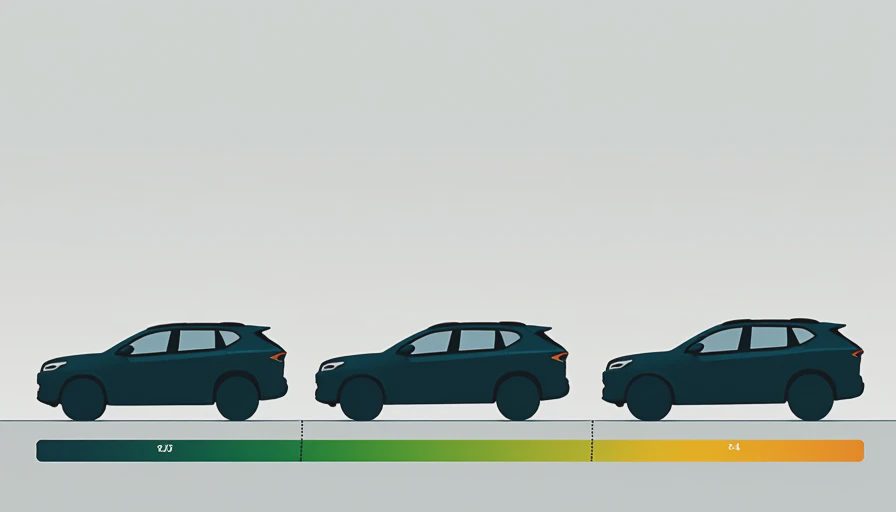
Toyota Grand Highlander — 69.6% after 5 years
The Grand Highlander sits at the top of iSeeCars' three-row SUV resale rankings for 2026, retaining 69.6% of its value after five years. That's 15.8 percentage points above the segment average. CarEdge's depreciation model puts the figure in a similar range, projecting a 70.4% residual after five years for a well-maintained example.
What drives the Grand Highlander's resale strength isn't mysterious. It carries Toyota's brand-level resale advantage — the automaker averages 64.9% across its lineup — and adds the specific demand dynamics of the three-row family segment, where used buyers are plentiful and willing to pay for reliability. The Grand Highlander also benefits from being a relatively new nameplate with modern safety tech and an available hybrid that keeps fuel costs manageable. In a segment where the average vehicle loses nearly half its value, the Grand Highlander loses less than a third.
Toyota Land Cruiser — 68.9% after 5 years
The Land Cruiser nameplate returned to the U.S. market with a smaller footprint and a lower starting price than its predecessor, and the used market has responded. iSeeCars data places it at 68.9% retained value after five years, with five-year-old models averaging $80,333. That high used price reflects both the Land Cruiser's global reputation for durability and the limited supply of well-maintained examples.
Toyota Sequoia — 67.7% after 5 years
The Sequoia rounds out the top three at 67.7%, with five-year-old models averaging $50,221. Like the Land Cruiser, it benefits from body-on-frame construction that appeals to buyers who plan to keep the vehicle beyond 150,000 miles. The Sequoia's resale performance also reflects its position as one of the few full-size SUVs with Toyota's reliability track record.
The Contenders: Where Rivals Are Gaining
Kia Telluride — 49.9% after 5 years
The Telluride has been a critical darling since its debut, earning comparison-test wins and building a reputation for interior quality that rivals luxury brands. But its resale math tells a more complicated story. CarEdge projects a five-year residual of just under 50% for a Telluride averaging 12,000 miles per year. That's roughly 20 points below the Grand Highlander — a gap worth approximately $8,000 on a comparably priced vehicle.
The 2027 redesign adds uncertainty. The Telluride's move to a turbocharged four-cylinder engine and the introduction of a hybrid variant mean the next generation's resale performance won't mirror the outgoing model's. Kia's 10-year/100,000-mile powertrain warranty does transfer to subsequent owners, which provides a floor under used values. But the Telluride's resale story is still being written — and for now, it trails the segment leaders by a meaningful margin.
Autoguide's April 2026 trade-in data for the outgoing Telluride generation shows a three-year-old 2023 SX trim in "Better" condition commanding roughly $40,100. That figure suggests the Telluride holds value well in its first three years, but the five-year data indicates steeper declines as the vehicle ages into higher mileage brackets. The third row's condition at trade-in is particularly important for this model — appraisers inspect the rear seats for stains and debris that signal heavy family use.
Mazda CX-90 — 46.8% after 5 years
The CX-90 earned a Top Safety Pick+ award and leads its class in driving dynamics, but its resale projections are modest. CarEdge data shows a five-year residual of 46.8%, with an estimated resale value of $23,904 on a vehicle that stickered around $51,000.
iSeeCars reports a slightly more optimistic 56.9% five-year retained value, though the discrepancy likely reflects different assumptions about mileage and condition.
The CX-90's resale challenge is structural: it's a relatively new nameplate from a brand whose resale reputation is still improving, and its inline-six engine — while refined — hasn't yet built the long-term reliability track record that used buyers rely on when valuing Toyota and Honda products. The CX-90's strong safety scores and premium interior may narrow the gap over time as more units age into the used market, but for now it depreciates faster than the segment leaders.
Hyundai Palisade — 52.5% after 5 years
The Palisade shares its platform with the Telluride, and its resale profile is similar. iSeeCars data shows a 52.5% five-year residual value, with an average price of $25,565 for a five-year-old example. The Palisade's retained value rating scores 8.0 out of 10 from iSeeCars, and its safety rating is 9.0. Like the Telluride, the Palisade benefits from Hyundai's warranty coverage, but its resale values haven't yet reached the levels that Toyota commands in this segment.
The Luxury Wildcards
Luxury three-row SUVs generally depreciate faster than mainstream models — higher MSRPs leave more room to fall. But the Lexus RX 450hL and Lexus TX 500h buck that trend, retaining 61.6% and 61.2% respectively after five years. Both benefit from Toyota's underlying reliability reputation and hybrid powertrains that used buyers value for their fuel efficiency and durability. For families cross-shopping luxury SUVs, these two Lexus models are the segment's strongest resale performers — but they still trail the mainstream Grand Highlander by roughly 8 percentage points.
What This Means for Your Shopping List
1. The resale spread is real money. The gap between the Grand Highlander at 69.6% and a mid-pack competitor at 50% is roughly 20 percentage points. On a $50,000 vehicle, that’s $10,000 over five years. If you trade out every three to five years, resale value should be among your top three decision criteria — alongside purchase price and fuel costs.
2. Toyota's lead is structural, not accidental. Three of the top four three-row SUVs for resale value wear Toyota badges. The reasons — limited incentives, conservative redesign cycles, and reliability scores that hold up past 150,000 miles — are difficult for competitors to replicate quickly. If resale value is a top priority, Toyota remains the safest bet in the segment.
3. The Koreans are competitive but not yet class-leading. The Telluride and Palisade hold value well for mainstream brands, but their five-year residuals trail Toyota's by a wide margin. The 2027 Telluride redesign introduces a new powertrain and hybrid option that will reshape the resale equation — but until real-world data accumulates, the historical depreciation curve is the best predictor available.
4. Don't assume all Toyota models perform equally. The Grand Highlander, Land Cruiser, and Sequoia all post strong residuals, but Toyota's smaller three-row models may not match those numbers. Check the specific model's five-year residual — not just the brand — before you buy.
5. Consider the total ownership cost, not just resale. A vehicle with a higher purchase price but stronger resale value may cost less to own than a cheaper vehicle that depreciates faster. Run the five-year total cost — purchase price minus projected resale value, plus fuel, insurance, and maintenance — before deciding.
The Bottom Line
The Toyota Grand Highlander leads the three-row SUV segment with a 69.6% five-year retained value, followed by the Land Cruiser at 68.9% and Sequoia at 67.7%. The gap between these leaders and the segment average of 53.9% is worth thousands at trade-in time.
For family SUV buyers, the practical takeaway is straightforward: if you plan to own for three to seven years, resale value isn't an abstract metric. It's the number that determines your equity position when it's time to sell. The Grand Highlander, Land Cruiser, and Sequoia are the segment's safest stores of value. The Telluride, Palisade, and CX-90 are competitive but don't yet match Toyota's resale math — and the gap is large enough to matter.
Don't buy the sticker price. Don't buy the awards. Buy the five-year number.
Sources: iSeeCars 2026 three-row SUV resale value rankings based on analysis of over 3 million vehicles, CarEdge depreciation projections, Autoguide trade-in value data, iSeeCars model-specific resale data.