
How We Crossed the $1,000 Threshold
The four-figure monthly payment isn‘t the result of one thing going wrong. It’s the result of several things converging at once.
MSRPs have risen steadily — up about 2.8% industry-wide in 2025 compared to 2024, and automakers have never reduced them on an annualized basis in the past decade . Interest rates, while easing slightly, remain elevated. The average new-vehicle loan rate in February 2026 was 6.72% . Insurance costs are well above pre-pandemic norms, and when layered into the monthly budget alongside the car payment, they push many households past the point of comfort .
The result: average monthly finance payments reached $811 in early 2026, up $32 from a year earlier. And that’s the average. For buyers financing larger SUVs — three-row family haulers, full-size pickups, loaded mid-trim crossovers — the math lands north of $1,000 faster than many expect.
AutoPayPlus surveyed more than 2,000 dealers and finance executives in March 2026 and found that 64% of dealers say more than three-quarters of their customers are choosing loan terms of 72 months or longer . Nearly 60% cited customer cash flow and budgeting as the biggest threat to their 2026 sales goals — exceeding concerns about high vehicle prices and interest rates combined .
The 84-Month Loan Is Now the Norm — and It Comes With a Trap
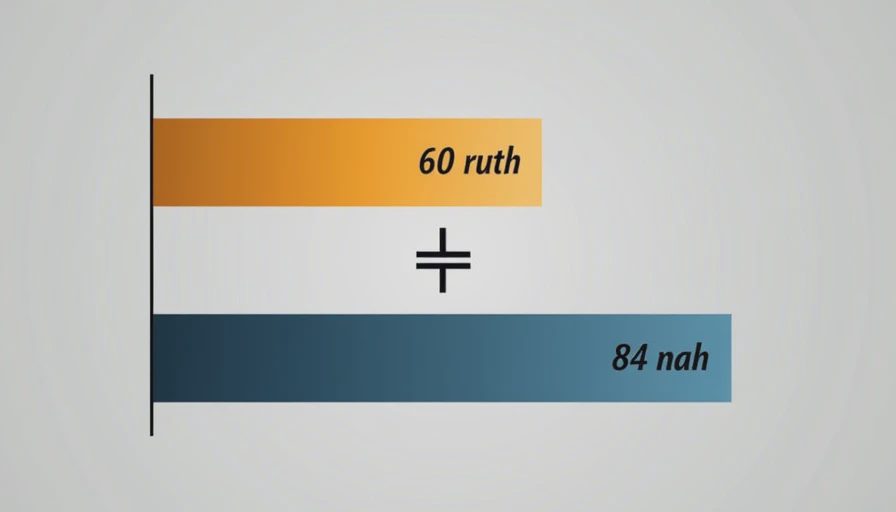
When the monthly payment crosses a buyer’s budget ceiling, the easiest lever to pull is the loan term. Extending from 60 to 72 months, or from 72 to 84 months, shrinks the monthly number — and keeps the deal alive.
The trade-off is total interest cost. An 84-month loan at 6.72% on a $45,000 SUV costs roughly $6,800 more in total interest than a 60-month loan at the same rate. The buyer feels the relief in the monthly budget, but pays for it over the life of the loan.
The bigger risk is negative equity. When loan terms stretch longer than the vehicle‘s value holds up, owners reach the trade-in window owing more than the SUV is worth. J.D. Power data shows 31.5% of new-vehicle buyers had negative equity on their trade-in as of February 2026, a 3.4 percentage point increase from a year earlier . AutoPayPlus found that 90% of dealers say they encounter negative equity frequently or in nearly every deal .
For family SUV buyers, this creates a cycle that‘s hard to break: stretch the loan to afford the payment, hit the trade-in window underwater, roll the negative equity into the next loan, and stretch that one even further. The monthly payment stays the same. The hole gets deeper.
Where Automakers Are Responding — and Where They’re Not
Automakers are aware of the affordability problem, and their responses are uneven.
Some are cutting prices directly on specific models. Hyundai slashed the 2026 Ioniq 5’s starting price to $35,000, effectively baking the expired $7,500 federal tax credit into the sticker. The result: Ioniq 5 sales rose 13% year-over-year in Q1 2026, even as the broader EV market softened. It’s a case study in pricing to the payment — and it’s working.
Others are relying on incentives rather than MSRP cuts. J.D. Power forecasts average incentives will increase by about $400 to $3,500 per vehicle in 2026, though final transaction prices are still expected to average $46,600 — an $800 increase over 2025. In other words, incentives are offsetting some of the MSRP increase, but not all of it. Buyers are still paying more.
Longer loan terms remain the default solution — and 76% of dealers say they are “extremely concerned” that extended terms are keeping customers out of the market longer by disrupting repeat purchase cycles . The industry is using the wrong tools to solve the affordability problem, and many of those tools make the long-term problem worse.
S&P Global notes that automakers face a delicate balance: discounting entry-level models to maintain affordability can compress margins across the entire lineup . Blanket price cuts are a domino effect that few brands can afford. The result is a market where the monthly payment keeps rising, but the industry’s tools to address it are limited.
What This Means for Family SUV Buyers
The $1,000 threshold changes the math on several fronts.
First, the gap between new and used is widening. If a new three-row SUV carries an 800 to 1,000 monthly payment, a three-year-old version of the same model — financed over 60 months instead of 84 — can cut that payment by 300 to 400. The used market is absorbing more demand from payment-sensitive buyers, and late-model used supply is beginning to recover as lease returns increase .
Second, the hybrid premium needs to be recalculated. Hybrids typically cost $1,500 to $3,000 more than their gas-only equivalents, but they also save $300 to $600 per year in fuel depending on mileage and gas prices. When monthly payments are already stretched, the higher upfront cost of a hybrid can be hard to justify — even if the long-term math favors it. Run the monthly payment on both versions, not just the five-year total cost. If the hybrid adds $40 to the monthly payment but saves $50 in fuel, you’re ahead. If it adds $60 and saves $40, you’re not.
Third, leasing is making a comeback. For buyers who want a lower monthly payment and don‘t plan to keep the vehicle beyond three to five years, leasing avoids the negative-equity trap of long-term financing. Monthly lease payments are typically lower than loan payments on the same vehicle, though the buyer builds no equity. In a market where equity is increasingly negative anyway, that trade-off may be worth it for some households .
Fourth, cross-shopping across segments is essential. The compact SUV that fits your family and the midsize SUV that fits a little more may be separated by $150 per month. That’s real money over 72 months. If the smaller vehicle meets 90% of your needs, the savings may outweigh the occasional inconvenience of a tighter cargo hold.
Where to Find Value When the Monthly Number Doesn‘t Fit
1. Shop the payment, but know the total cost. A $550 monthly payment over 84 months costs more in total than a $700 payment over 60 months. The payment number is what fits the monthly budget, but the total cost is what affects your financial position over time. Know both before you sign.
2. Look for models where the automaker has cut the sticker price, not just the incentive. Hyundai’s Ioniq 5 price cut is a model for what works: lower the MSRP, make the payment math transparent, and let the vehicle sell itself . When an automaker cuts the price rather than offering a rebate, the savings flow through to financing, leasing, and resale — not just the upfront transaction.
3. Consider a three-year-old version of the SUV you want. Late-model used supply is beginning to normalize, and a three-year-old vehicle returning from lease carries a significantly lower purchase price while still offering modern safety tech, reasonable mileage, and remaining factory warranty in many cases .
4. Be honest with the dealer about your payment target. Mark Schirmer of Cox Automotive advises transparency: “If price is an issue, the best advice is to be honest and transparent with a dealer about your monthly payment target — they will try to make something work” . You‘re not revealing a weakness. You’re setting a parameter for the negotiation.
5. Watch the total cost of ownership, not just the payment. Insurance, fuel, and maintenance all factor into the monthly outflow. A vehicle with a lower payment but higher insurance costs may not save money overall. Get an insurance quote on any vehicle you‘re seriously considering before you commit.
The Bottom Line
The $1,000 monthly payment has arrived, and it’s not evenly distributed. SUV and truck buyers are reaching the threshold first, and the industry‘s response — longer loans, modest incentives — is softening the blow but not reversing the trend.
For family SUV buyers, the practical takeaway is straightforward: the monthly payment is the number that fits your budget, but the total cost is the number that determines whether the vehicle was a good financial decision. Don’t let the first number obscure the second. Shop the vehicle, run the payment, check the total cost, and know that in 2026, the gap between those numbers is wider than it‘s ever been.
Don’t buy the monthly payment. Buy the vehicle you can afford over the life of the loan — even if that means buying used, buying smaller, or waiting.
Sources: S&P Global Mobility, J.D. Power/GlobalData, Cox Automotive, AutoPayPlus dealer survey, Hyundai Motor America sales data, CarGurus 2026 market outlook.