
The Insurance Institute for Highway Safety doesn't make the news dramatic. It makes the tests harder.
That's exactly what happened with the updated side-impact test — and for small SUV buyers, the results deserve more than a quick glance at the star count. Here's why the new protocol exists, which vehicles held up, and how to read the data without getting lost in engineering jargon.
Why the Side Test Changed
The original IIHS side test used a 3,300-pound barrier striking the vehicle at 31 mph. The updated version raises the barrier weight to 4,200 pounds and the speed to 37 mph — simulating a modern midsize SUV hitting your vehicle from the side at intersection speeds.
The logic is straightforward. The average vehicle on American roads has gotten heavier over the past two decades. A test designed for a sedan-dominated fleet no longer reflects the real-world collision you're most likely to experience. The question isn't whether the old test was flawed — it's that the world around it changed.
The new test also places a smaller dummy in the rear seat, reflecting a child or smaller adult. This matters for families. A vehicle that protects the driver perfectly may still fail to protect the person sitting behind them.
What "Good" Actually Means Now
Under the updated protocol, a Good rating requires the vehicle to maintain adequate survival space for both front and rear occupants, with no excessive intrusion into the cabin. Sensors on the dummies measure forces to the head, neck, torso, and pelvis.
But here's the detail most headlines skip: a Good rating in the side test doesn't mean zero injury risk. It means the measured forces fell below thresholds associated with serious or fatal injury. There's a gap between "passed the test" and "your family walks away unscathed" — and that gap is where real-world variables like impact angle, vehicle height mismatch, and seating position come into play.
This is a core DriveByNumbers principle: Don't confuse a lab score with a guarantee. The rating is a signal, not a promise.
Which Small SUVs Performed Best
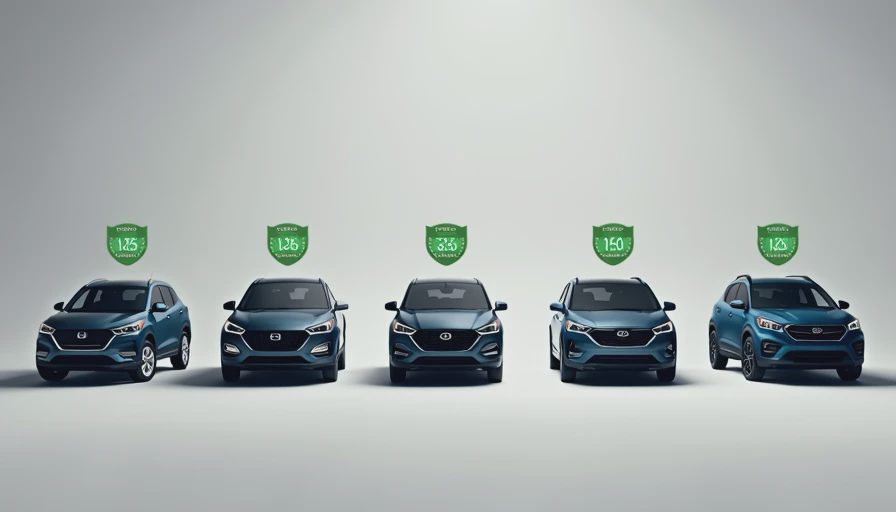
IIHS has not released a single comprehensive ranking exclusively for the updated side test. But cross-referencing the 2026 Top Safety Pick and Top Safety Pick+ lists with the side-test requirements tells a useful story.
To qualify for either award in 2026, a vehicle must earn a Good rating in the side test — no exceptions. That means the following small SUVs cleared the bar:
Honda HR-V
Hyundai Kona
Hyundai Tucson
Kia Sportage (built after May 2025)
Mazda CX-30
Mazda CX-50
Subaru Forester
Genesis GV60
Hyundai Ioniq 5
These aren't niche picks. Most are mainstream, family-priced vehicles — and several start under $30,000. The takeaway isn't that only expensive SUVs protect well. It's that testing rigor has caught up to the market, and automakers who invested early in structural upgrades are the ones showing up on the right side of the list.
What's Not on the List Matters Too
Equally telling are the absences. Some vehicles that performed well under the old protocol haven't yet been retested — or haven't met the new, higher bar. That doesn't mean they're unsafe. It means the data is incomplete.
For a family buyer, an absent rating isn't a red flag. But it is a reason to pause and ask harder questions — especially if you're comparing a vehicle with a verified Good rating against one that's still waiting for updated results.
How to Use This Information
If you're shopping for a small SUV right now, here's the practical framework:
Prioritize vehicles with a 2026 Top Safety Pick or Top Safety Pick+. The side-test requirement alone doesn't guarantee a perfect vehicle, but it does guarantee that the manufacturer cleared a meaningfully higher bar than the one in place two years ago.
Don't assume model-year consistency. A 2024 rating and a 2026 rating are not interchangeable. Structural updates, side-airbag tuning, and seatbelt logic can change between model years — and so can test results.
Look beyond the overall score. IIHS publishes sub-scores for driver and rear-passenger protection. If one is Good and the other is Acceptable, the overall rating may mask the weaker link. That weaker link matters if you regularly carry kids in the back.
Remember what ratings can't tell you. No test replicates every crash scenario. A Good rating in a controlled lab collision doesn't guarantee protection in a 50-mph T-bone at an intersection. Ratings narrow uncertainty. They don't eliminate it.
The updated IIHS side test isn't a reason to panic about the small SUV segment. It's a reason to pay closer attention — and to recognize that safety isn't a binary label you check off during the test drive. It's a moving target. The best thing a buyer can do is aim for the highest verifiable standard available right now, and acknowledge that the data will keep evolving.
That's not a comfortable truth. But it's the honest one.