
If you're shopping for a compact SUV, chances are you've seen the Chevrolet Equinox on every comparison list. But what do drivers actually think after a year or two of ownership? We've collected real-world insights from owner forums, long-term test drives, and professional critiques to deliver honest, data-backed **reviews of the Chevrolet Equinox**. No fluff—just what matters if you're spending your own money.
How the Equinox Drives: Comfort Over Thrills
The Equinox comes standard with a 1.5-liter turbocharged four-cylinder engine producing 170 horsepower and 203 lb-ft of torque. It's mated to a six-speed automatic transmission. This powertrain is adequate for daily commuting and highway merging, but it won't excite anyone. The ride is tuned for comfort—cushy and quiet—making long trips pleasant. Fuel economy is decent: EPA estimates 26 mpg city and 31 mpg highway for front-wheel-drive models, slightly lower with all-wheel drive. That's competitive but not class-leading. Compared to the Honda CR-V and Toyota RAV4, the Equinox feels less responsive and less refined. For most buyers who prioritize a smooth ride over spirited handling, it's a fair trade-off.
Interior Space: Big Enough for Most Families
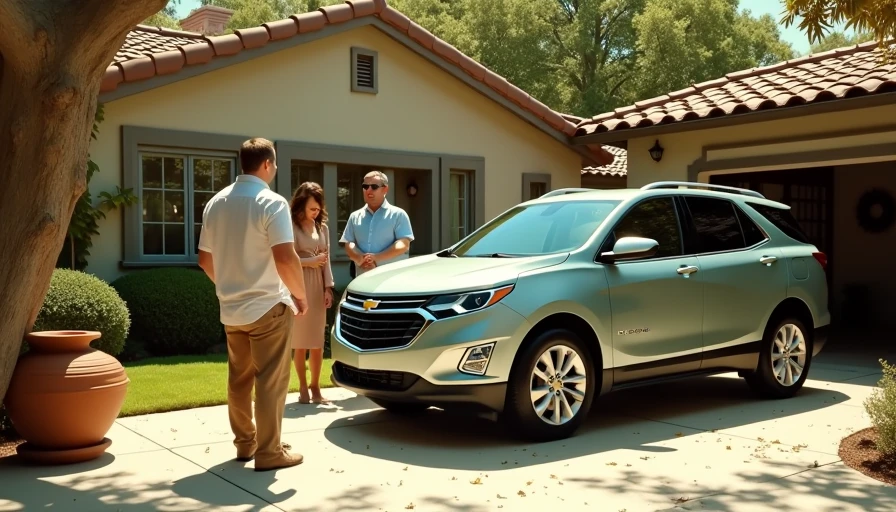
Inside, the Equinox offers 29.9 cubic feet of cargo space behind the rear seats, expanding to 63.9 cubic feet with the seats folded. That's less than the CR-V (39.2/76.0) and RAV4 (37.6/69.8). However, the rear seats are spacious enough for two adults or three kids on shorter trips. The cabin materials are functional—soft-touch surfaces on the dash but hard plastics on lower doors. Standard tech includes a 7-inch touchscreen with Apple CarPlay and Android Auto, plus available wireless charging. The user interface is simple and responsive. If you prioritize a comfortable, well-equipped interior over maximum cargo volume, the Equinox delivers.
Safety and Reliability: What the Data Says
The Equinox earns top scores from the IIHS (Good in most crash tests) and five stars from NHTSA overall. However, some trims have headlight ratings of Marginal or Poor, which prevents a Top Safety Pick+ award. Many **reviews of the Chevrolet Equinox** note that safety tech like automatic emergency braking and lane-keeping assist are standard, but blind-spot monitoring is optional—a shortcoming in this segment. Reliability is average: Consumer Reports gives the Equinox a 3 out of 5 predicted reliability score, with some complaints about transmission and electrical issues in earlier model years. Recent years have improved, but it's not as bulletproof as the RAV4.

Pricing and Resale Value: Is It a Good Deal?
Starting around $28,000 for the base LS trim and climbing to about $35,000 for the Premier, the Equinox is often discounted with incentives from Chevrolet. That puts its effective price below many rivals. But resale value is a weakness. According to most **reviews of the Chevrolet Equinox**, it depreciates roughly 40% over three years—worse than the segment average. If you plan to keep the car long-term, the lower upfront cost can offset that loss. For shorter ownership periods, leasing or buying a certified pre-owned Equinox may make more financial sense.
The Verdict: Who Should Buy a Chevrolet Equinox?
The Equinox is a solid, no-surprises compact SUV for buyers who value comfort and price over driving dynamics or maximum cargo space. It's a practical choice for families and commuters who want a reliable, straightforward vehicle without the premium price of a Honda or Toyota. If you can live with average fuel economy and a smaller cargo hold than the class leaders, this Chevy is worth a test drive.
Where to Find More Owner Reviews
For more detailed **reviews of the Chevrolet Equinox**, owner communities like the Chevy Equinox Forum and feedback on Edmunds, Kelley Blue Book, and Consumer Reports offer long-term perspectives. Reading multiple sources helps you spot common themes—like fuel injector issues in earlier models or the quiet cabin—so you know exactly what you're getting into.
Equinox vs. Top Competitors: How It Stacks Up
When reading **reviews of the Chevrolet Equinox**, it helps to compare it against its main rivals: the Honda CR-V, Toyota RAV4, and Ford Escape. The CR-V offers more cargo space and a more refined ride, but costs about $2,000 more on average. The RAV4 has better resale value and a standard hybrid option, but its interior feels less premium. The Escape offers sportier handling and more powerful engine choices, but its reliability scores are similar. The Equinox often wins on upfront price and comfort, but loses on cargo room and long-term value. According to recent owner feedback, Equinox drivers report fewer infotainment glitches than Escape owners, but more transmission hesitation than CR-V drivers. For budget-conscious buyers who prioritize a quiet cabin and low monthly payments, the Equinox remains a sensible choice. However, if you plan to keep your SUV for eight to ten years, the higher resale of a Toyota or Honda may offset the initial savings. Ultimately, the best way to decide is to test-drive each model back-to-back and weigh what matters most to you. For example, the Equinox's standard 1.5-liter engine feels adequate in city driving, but the RAV4's available 2.5-liter four-cylinder provides more passing power on highways. In terms of safety, the Equinox's automatic emergency braking is standard, but blind-spot monitoring—an important feature for many—is not. In contrast, the RAV4 offers blind-spot monitoring on most trims. The Equinox's warranty is average: 3-year/36,000-mile basic and 5-year/60,000-mile powertrain. That matches the CR-V but falls short of the Hyundai Tucson's 10-year/100,000-mile powertrain coverage. So when comparing total cost of ownership, consider not just the purchase price but also depreciation and repair costs.