
The debate between the Chevy Equinox and Honda CR-V is one of the most common in the compact SUV segment. But the equinox vs crv question isn't about hype—it's about which one delivers better ownership value for the money. Let's look at the data.
Both SUVs are perennial best-sellers, but they take very different approaches. The Equinox leans on aggressive pricing and a refreshed design, while the CR-V leans on a reputation for reliability and resale strength. Which one actually wins on the metrics that matter? Here's our breakdown.
Where the Equinox vs CR-V Diverge on Practical Features
The first thing you notice in the equinox vs crv comparison is interior space. The CR-V offers 39.3 inches of rear legroom versus the Equinox's 39.9 inches—effectively a tie. But cargo volume tells a different story: behind the second row, the CR-V provides 39.3 cubic feet, while the Equinox offers 29.9 cubic feet. If you regularly haul gear, the Honda wins hands-down.
However, the Equinox counters with a lower starting price—about $28,000 for the base LS trim versus the CR-V's $29,500. For budget-conscious families, that initial savings is meaningful. But as we'll see, the long-term costs can flip the equation.
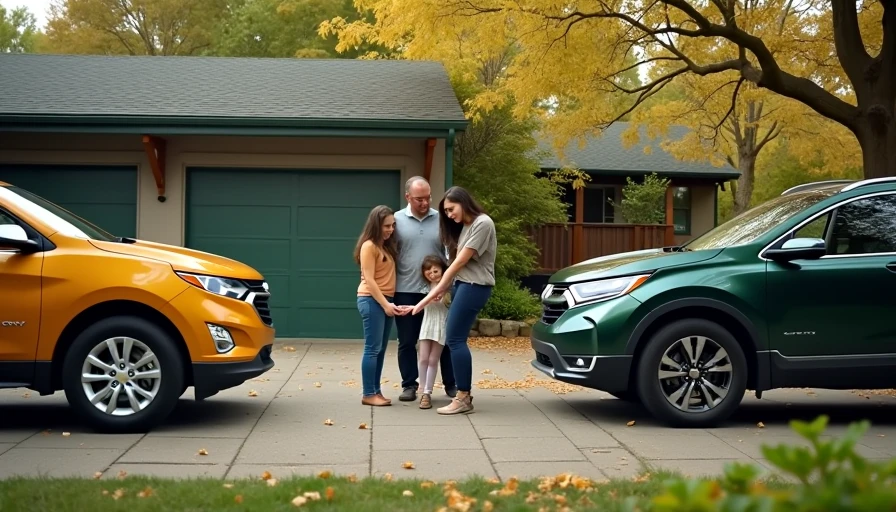
Standard features also differ. The 2025 Equinox includes a 7-inch touchscreen with wireless Apple CarPlay and Android Auto on most trims. The CR-V starts with a 7-inch screen too, but adds a digital gauge cluster on higher trims. Neither is a standout—both get the job done.
Fuel Economy and Cost of Ownership
When comparing the equinox vs crv on fuel economy, the Honda pulls ahead. The CR-V achieves 28 city/34 highway mpg with its 1.5-liter turbo, while the Equinox's 1.5-liter turbo returns an EPA-estimated 26 city/31 highway. Over 15,000 miles per year, that's roughly $150 to $200 less in fuel costs annually for the CR-V, assuming $3.50 per gallon.
But the cost story doesn't end at the pump. According to widely cited ownership data, the CR-V holds its value significantly better. After five years, a CR-V typically retains about 55% of its original MSRP, compared to the Equinox's 45%. That means the Equinox's lower purchase price gets eroded by higher depreciation.
Insurance costs are more even. Both vehicles fall in similar liability and comprehensive brackets, so expect premiums within 5-10% of each other. The CR-V might edge slightly higher due to higher repair costs, but it's negligible.
Safety and Reliability
Safety is a critical factor in the equinox vs crv decision. Both SUVs earn Top Safety Pick+ ratings from IIHS when equipped with the right headlights—a significant achievement. The CR-V also aces NHTSA's overall 5-star rating, while the Equinox scores 4 stars overall (5 in side impact). In real-world terms, both are excellent.
Reliability tilts toward the CR-V. Consumer Reports gives the Honda a predicted reliability score of 85 out of 100, while the Equinox sits at 72. Owners report fewer transmission and electrical issues with the CR-V over the long haul. That doesn't mean the Equinox is bad—it's just that the Honda has a proven track record.

Resale Value and Market Position
The final chapter in the equinox vs crv story is resale. As mentioned, the CR-V depreciates slower. After three years, a CR-V might still be worth around $22,000 on a $30,000 purchase, while the Equinox would be closer to $18,000. That $4,000 gap nearly eliminates the Equinox's initial price advantage.
Inventory and availability also matter. The CR-V often has waiting lists, while Equinox incentives can be generous. If you need a car right now, the Chevy might be easier to get. But if you can wait, the CR-V is likely the smarter long-term investment.
Frequently Asked Questions About the Equinox vs CR-V
Prospective buyers often have specific concerns when deciding between these two SUVs. Here are answers to the most common questions:
**Which SUV offers better cargo space for families?**
The Honda CR-V leads significantly with 39.3 cubic feet of cargo space behind the second row, compared to 29.9 cubic feet in the Equinox. For strollers, luggage, or sports equipment, the CR-V is the more practical choice.
**Is the Equinox cheaper to insure than the CR-V?**
Insurance premiums are nearly identical for both vehicles, with the Equinox possibly undercutting the CR-V by $50 to $100 per year due to lower average repair costs. However, your individual rate depends on your driving record, location, and coverage levels. Always shop around for the best rate.
**Does the CR-V hold its value better than the Equinox?**
Yes, significantly. After five years, the CR-V retains about 55% of its original MSRP, while the Equinox retains only about 45%. That difference of roughly $4,000 on a $30,000 purchase more than offsets the Equinox's lower initial price.
**Which SUV is more fun to drive?**
Neither is a sports car, but the CR-V offers a slightly more refined ride and better handling. The Equinox has a firmer suspension and less steering feedback. For daily commuting and highway cruising, both are comfortable, but the Honda edges ahead in driver appeal.
Verdict: Which Should You Buy?
So which wins the equinox vs crv battle? It depends on your priorities. If you want the lowest upfront cost and you don't keep cars long, the Equinox is a solid buy. If you plan to own for five-plus years or care about cargo space and resale, the CR-V is the clear choice.
The question isn't whether either is good—it's whether it makes sense for your situation. For most families, the CR-V gives better ownership value. Don't buy the cheaper sticker price without considering the full cost of ownership.